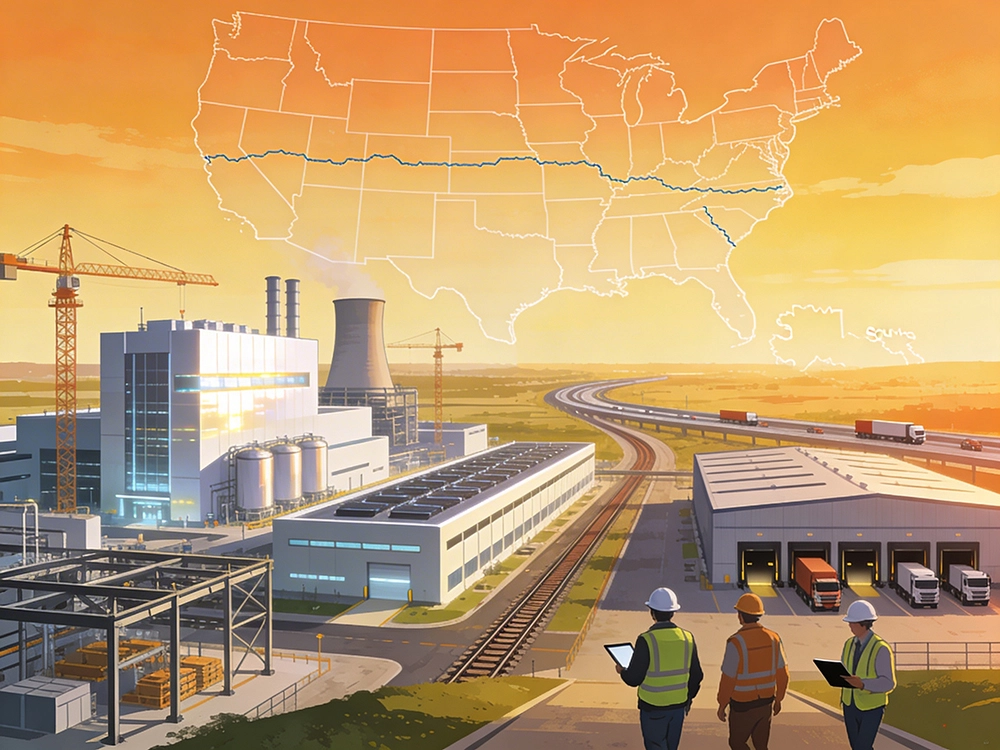
Stand on the edge of an industrial park outside Columbus, Phoenix, or Austin in 2026, and the story of the U.S. economy looks very different from a stock chart. Cranes crowd the skyline. Concrete pads stretch into the distance. Signs advertise hiring bonuses. What was "offshored for good" is, in many sectors, being rebuilt—though not as a simple rewind.
The new American industrial belt is a lattice of semiconductor fabs, battery plants, logistics hubs, advanced manufacturing, and data centers, woven by incentives, geopolitics, and changing views of risk.
Three forces converged: geopolitical risk (far‑flung, single‑point‑of‑failure supply chains are no longer acceptable), policy (semiconductor subsidies, clean‑energy tax credits, state incentives), and technology (automation narrows the labor‑cost gap).
Semiconductors are the most visible symbol. $20–$30 billion fabs make national news. They are planted on U.S. soil because that soil now carries a geopolitical premium.
Around fabs grow ecosystems: specialty chemicals, precision machining, clean‑room contractors. Add EV and battery plants, and you see "energy‑digital" industrial clusters.
Geography: The Southeast has become a magnet for auto and battery investment. The Southwest and Texas attract fabs and data centers. The Midwest sees selective renaissance—new plants for components and machinery.
However, many new facilities are highly automated and skill‑hungry. They create well‑paid jobs but not in the same numbers as twentieth‑century assembly. Communities that align education pipelines capture benefits.
Environmental footprint: many projects align with decarbonization; plants can be resource‑intensive. Local debates revolve around water use, substations, and air‑quality controls.
Infrastructure is a stress point. Roads, rail, substations need upgrades. Housing echoes: rents and home prices tick up as workers arrive.
On the macro level: building more at home can reduce import dependencies, but capital intensity and competition for inputs can be inflationary.
Trade relationships are being rewritten. The U.S. prefers supply chains within allied blocs or rapidly reconfigurable.
The communities most likely to thrive treat each new facility as a node in a broader strategy: supplier networks, local entrepreneurship, education, diversification.