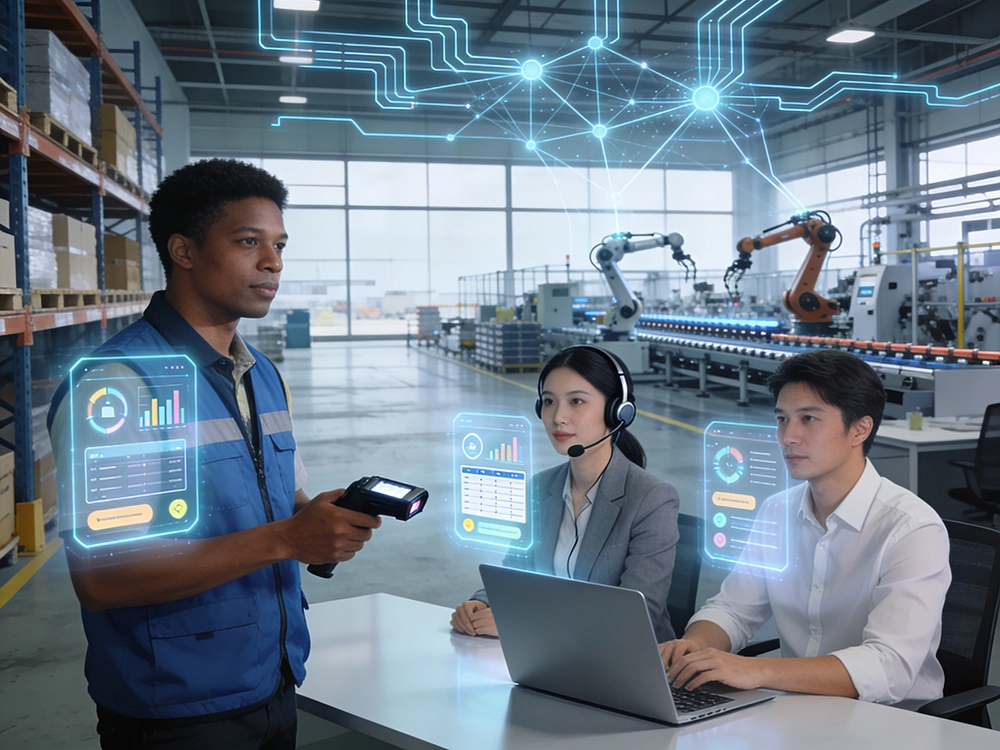
By early 2026, artificial intelligence is no longer a "future of work" talking point—it is a daily operational reality inside U.S. companies. Systems that draft emails, summarize meetings, allocate shifts, screen résumés, and optimize logistics sit at the core of how organizations function.
The old, binary frame—"Will AI create more jobs than it destroys?"—misses the point. The real story is about recomposition: which tasks are automated, who is augmented, who is squeezed, and how the gains from productivity are divided.
I. How AI Is Restructuring Work Inside Firms
1. White-collar and administrative work: first automated, then up-leveled
Generative and predictive systems handle routine cognitive tasks. Companies react with expectation creep or staffing recalibration. The classic path of "do low-value work for a few years, then move up" is under pressure.
2. Services and frontline jobs: AI as invisible supervisor
In retail, hospitality, and logistics, AI governs how workers work: demand-forecasting drives schedules, recommendation systems guide customer interactions. Workers experience "management by algorithm."
3. Knowledge professions: from producers to orchestrators
Lawyers, consultants, analysts, and programmers get credible first passes from AI. The human role shifts toward problem framing, verification, and synthesis. Value concentrates in fewer hands.
II. Where Does the Productivity Go?
In many industries, AI increases the credible threat of substitution. Simply using AI as an end user is increasingly assumed, not rewarded. A small group of architects and integrators see pay rises; a larger group has bargaining position depending on the broader labor market.
III. Regulation, Governance, and Collective Response
Regulators focus on fairness in hiring, transparency of scheduling algorithms, and limits on data use. In unionized sectors, AI appears in contracts: consultation before deployment, retraining commitments, provisions for sharing productivity gains.
IV. Uneven Impacts: Who Wins, Who Loses?
Workers without postsecondary education are more exposed. AI investment clusters in tech hubs. Large enterprises build internal platforms; SMBs rely on off‑the‑shelf tools. The risk is a hollowing out of the middle.
V. Practical Perspectives
For workers: map your tasks, move up the value chain, use the tools aggressively. For employers: redesign jobs, invest in reskilling, be transparent. For investors: operational leverage plays, human-capital platforms, governance vendors.
The most resilient roles and organizations treat AI neither as magic replacement nor distant threat, but as a powerful, imperfect tool integrated thoughtfully into the messy, human reality of work.